The Arkansas Trav'ler
Pitmaster Gazette · Championship BBQ Edition
How-To Guide
BBQ Rub for Chicken: Less Sugar, More Pepper, and Crispy Skin
The mistake most people make with a bbq rub for chicken is using the same rub they use on pork shoulder or ribs. It works — chicken will still taste good — but it’s not optimized, and it can actively cause problems, particularly with skin that blackens before the meat is done.
A chicken-specific rub should be less sweet than a pork rub (skin burns easier), more savory and pepper-forward (chicken has a milder base flavor that needs bolder seasoning), and applied differently depending on whether you’ve got skin-on parts or skinless. Here’s the full breakdown.
Why chicken needs a different rub
Three reasons:
-
Chicken skin burns faster than pork fat. Pork shoulder has thick connective fat that renders slowly over 12+ hours. Chicken skin is a thin layer of fat and collagen, and when you hit it with a sugar-heavy rub, the sugar caramelizes quickly — and then burns. You can lose a chicken’s appearance in 20 minutes of inattention.
-
Chicken has a milder base flavor than pork or beef. Pork shoulder carries a lot of flavor on its own, so the rub is a supporting player. Chicken is a blank canvas, especially white meat. The rub needs to do more work.
-
Chicken cooks fast. A whole chicken is done in 2-3 hours; pork shoulder takes 12-14. That short cook time means you need a rub that flavors the meat quickly — fine-ground spices, bold flavors, enough salt to season without curing.
The base ratio for a chicken rub
Start with this. Adjust to taste after you’ve cooked with it twice.
- 2 tablespoons paprika (sweet or smoked, your call)
- 2 tablespoons kosher salt
- 2 tablespoons freshly cracked black pepper
- 1 tablespoon garlic powder
- 1 tablespoon onion powder
- 1 tablespoon brown sugar (yes, some — but much less than a pork rub)
- 1 teaspoon dried thyme
- 1 teaspoon dried oregano
- 1 teaspoon cayenne
- 1/2 teaspoon celery salt (optional but great)
Makes about 3/4 cup. Enough for 4 whole chickens or about 24 pieces of bone-in chicken. Store in a sealed jar, use within 3 months.
Compare the sugar ratio to a pork rub: a typical pork rub is about 33% sugar by volume. This chicken rub is about 10% sugar. That’s not a small difference — it’s the difference between crispy skin and burnt skin.
What each ingredient is doing
Paprika is the color builder. Chicken needs visual appeal — a pale chicken looks undercooked even when it’s done. Paprika gives you that warm red-brown color you want. Smoked paprika adds a secondary smoke note which can be great on a gas grill but may compete with real wood smoke on a smoker.
Salt is the only ingredient that actually seasons the interior meat. Kosher salt penetrates slowly, which is why you want to rub chicken and let it rest for at least 30 minutes before cooking — ideally 2-4 hours in the fridge.
Black pepper is doing double duty: flavor and bite. Chicken needs pepper the way pork needs sugar. Don’t be shy. Use fresh cracked pepper — the powdery stuff from a can is half as flavorful.
Garlic and onion powder are the savory backbone. They’re what make a chicken rub taste “cooked” and professional instead of just “seasoned.”
Brown sugar, at this low level, isn’t there to build bark — it’s there for a little bit of caramelization on the skin and to balance the salt. You can leave it out entirely for a savory-only rub. If you leave it out, consider adding a tiny bit of maple syrup or honey to the sauce at the end if you want some sweetness in the finish.
Thyme and oregano — this is where the chicken rub diverges from every other BBQ rub. Herbs don’t belong on a brisket or a pork shoulder. On chicken, they’re beautiful. Dried thyme especially has an almost-lemony quality that cuts through the fat of dark meat chicken. Rosemary works too but can be overwhelming — use it sparingly if at all.
Cayenne is heat, but small amounts. Chicken can’t hide behind its own fat the way pork can, so heat registers more directly. Start with 1 teaspoon, work up from there.
Celery salt is the secret ingredient. It gives chicken a faint background flavor that people can’t quite identify but always miss when it’s not there. Think Old Bay without the seafood notes. Optional but recommended.
Applying rub to chicken: the timing question
Chicken rub timing matters more than it does for pork, because chicken’s thin skin and small size make every variable matter more.
For bone-in, skin-on chicken (thighs, drumsticks, whole chickens):
- Pat the chicken completely dry with paper towels — crucial for crispy skin
- Apply a very light binder if you want — olive oil or mayonnaise (mayo helps skin crisp)
- Sprinkle the rub from 10 inches above, covering all surfaces including under the skin where you can get fingers under it
- Let it rest in the fridge uncovered for 2-4 hours — this is called dry brining and it’s the single biggest trick for getting crispy chicken skin
The uncovered fridge rest is critical. The cold air dehydrates the skin slightly, and dry skin is crispy skin. Covered rubbed chicken in the fridge comes out with rubbery skin no matter how you cook it.
For boneless, skinless chicken breasts or thighs:
- Pat dry
- Rub generously (more rub is fine since there’s no skin to burn)
- Rest at room temperature for 30 minutes
- Cook immediately
Boneless chicken doesn’t need the long dry brine — it just needs to be seasoned and cooked.
For whole chicken or spatchcocked chicken:
- Pat completely dry inside and out
- Get fingers under the breast skin and apply rub directly to the meat
- Apply rub all over the exterior skin
- Rest uncovered in the fridge 4-24 hours (overnight is ideal)
- Pull from fridge 30 minutes before cooking
The under-skin application is non-negotiable for whole birds. Rub on top of the skin only seasons the skin; rub underneath seasons the meat.
Skin-on vs skinless: why it matters
Skin-on chicken:
- Use a rub with less sugar (the version above is well-calibrated)
- Dry brine in the fridge uncovered for crispy skin
- Cook at moderate smoker temps (275-325°F for better skin rendering; 225°F will make skin rubbery unless you finish on a grill)
- Sauce at the very end if at all
Skinless chicken:
- You can use more sugar (no skin to burn)
- Salt before cooking is enough — no need for a long rest
- Cook at lower temps if you want — chicken breast benefits from 225-250°F for maximum juiciness
- Baste with sauce or butter during the cook to prevent drying
If you’re serious about crispy skin on smoked chicken, don’t try to do it at 225°F. The collagen in chicken skin needs higher heat to render — 275°F minimum, 325°F is better. Low-and-slow chicken is a different dish than crispy-skin chicken, and you should pick one.
Pairing chicken rub with white BBQ sauce
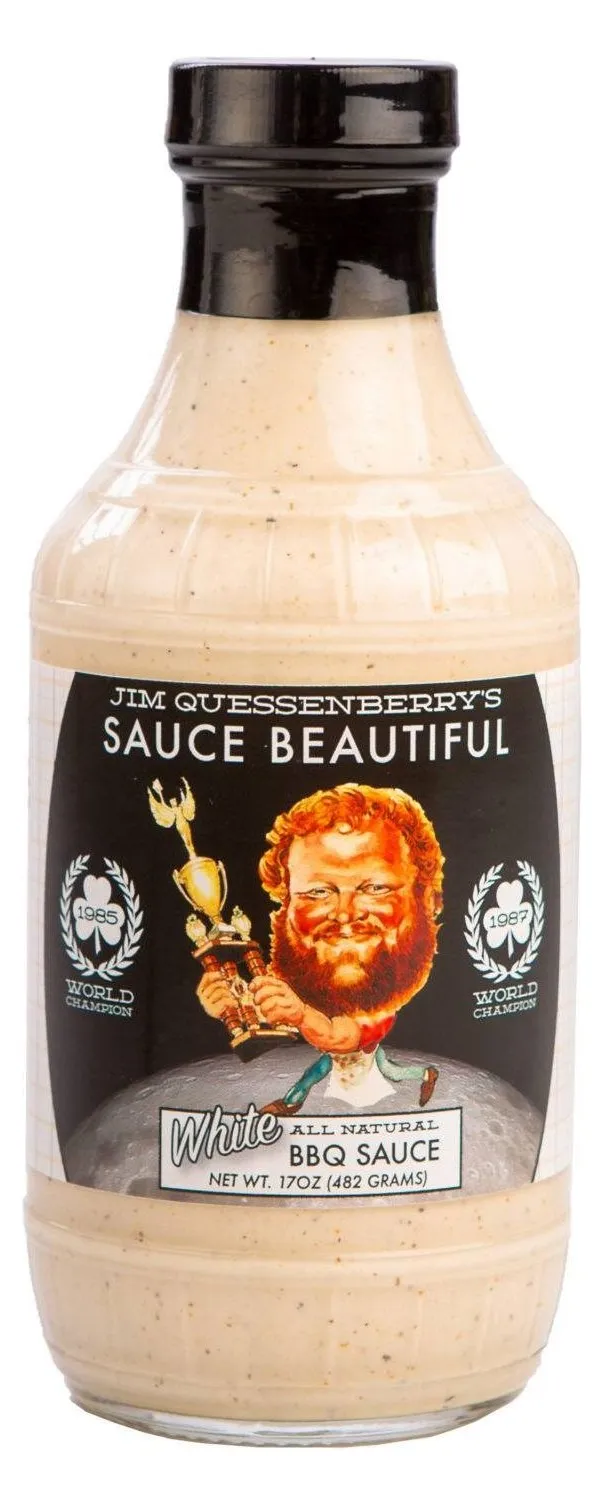
Here’s the championship combo: a savory, peppery, herbal rub plus Sauce Beautiful White. The rub builds the base flavor on the chicken — salt, pepper, herbs, garlic, a whisper of heat. The white sauce brings the mayo-based Alabama classic — sharp vinegar, black pepper, garlic, the whole thing.
Together they make smoked chicken taste like something you’d drive three states to eat. Brush the white sauce on in the last 10 minutes of the cook, or dunk the whole bird in a vat of it when it comes off the smoker (the Big Bob Gibson method). Either way, you’ll see why white BBQ sauce is the most under-appreciated sauce in American BBQ.
For the full white BBQ sauce story, see our what is white BBQ sauce guide.
Whole chicken vs parts
Whole chicken:
- Rub everything — including under the breast skin
- Spatchcock if you can (removing the backbone so the bird lays flat) — it cooks more evenly
- Smoke at 275-325°F for 1.5-2.5 hours depending on size
- Target 165°F in the breast, 175°F in the thigh
Thighs and drumsticks (dark meat):
- Dark meat is more forgiving — you can cook to 175-185°F for extra tender, collagen-rich meat
- Smoke at 275°F for 60-90 minutes
- The best value cut by far
Breasts (bone-in, skin-on):
- The hardest to get right — easy to overcook
- Smoke at 275°F for 60-90 minutes
- Pull at 160°F and let carryover cook take it to 165°F
- Or brine first for insurance
Wings:
- Perfect smoker food — huge surface area for rub, forgiving timeline
- Smoke at 275°F for 60-90 minutes until skin is crisp
- Toss in sauce after the smoke, or serve with white BBQ sauce for dipping
Or grab an all-purpose rub
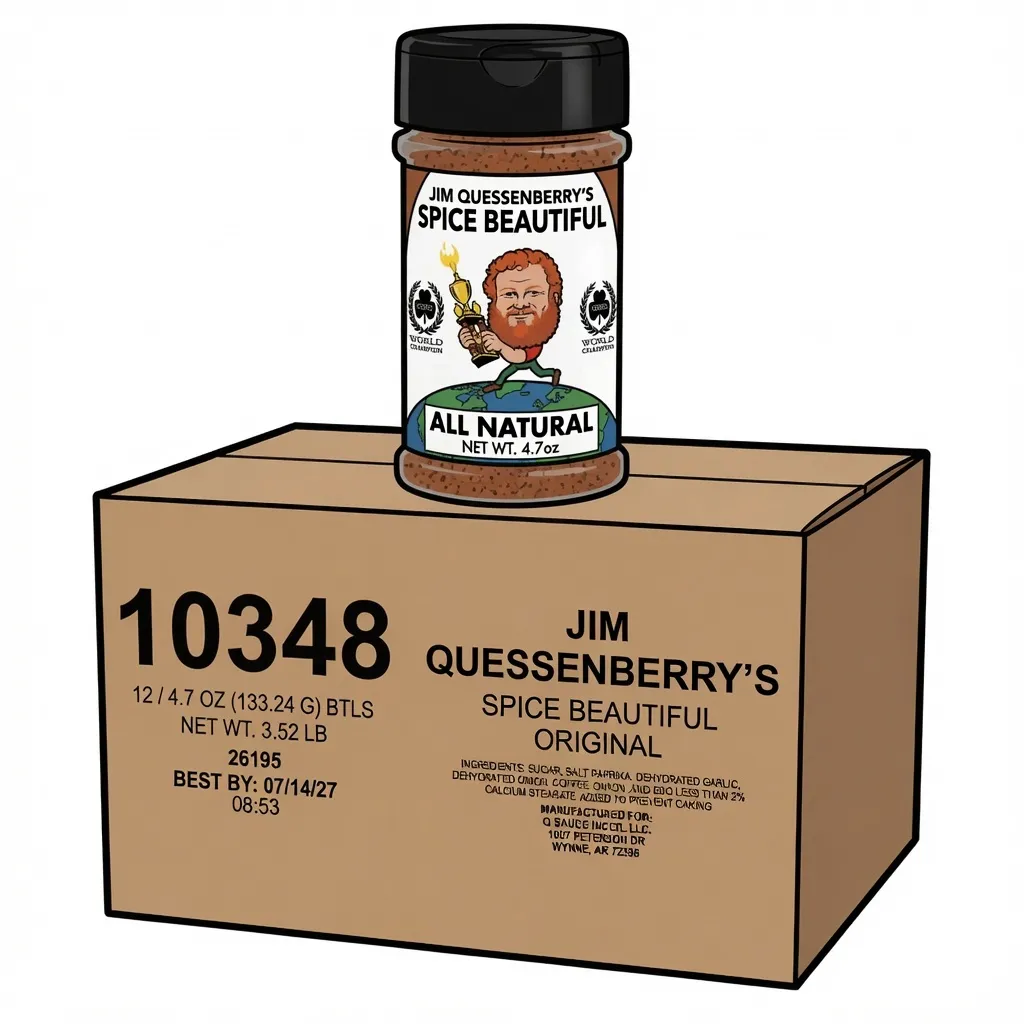
The homemade chicken rub above is great if you like mixing your own spice blends. If you’d rather skip that step and grab something that works on chicken out of the bottle, Spice Beautiful Original is our all-purpose championship rub — it has less sugar than a dedicated rib rub and works beautifully on chicken alongside pork and beef. It’s not a dedicated chicken rub but it’s closer to one than most commercial rubs.
Pair it with Sauce Beautiful White on smoked chicken and you’ve got the championship combo.
Cook that sumbitch. We’ll eat it.
— End of dispatch · Hand-packaged in Arkansas —