The Arkansas Trav'ler
Pitmaster Gazette · Championship BBQ Edition
Product Guide
Sauce Beautiful vs Blues Hog BBQ Sauce: An Honest Comparison
Blues Hog is one of the most famous BBQ sauces in competition barbecue. It’s won more trophies on the professional BBQ circuit than almost any other commercial sauce. Pitmasters from Kansas City to Memphis to the Jack Daniels Invitational have used Blues Hog as their base sauce or in blends for decades. If you’ve been around competitive BBQ at all, you know the name.
Sauce Beautiful comes from a different lineage. Jim Quessenberry was a two-time World Champion pitmaster from Arkansas who cooked through the 1970s-1990s, won at Lisdoonvarna, Ireland in both 1985 and 1987, and built his own sauce recipe that his sons still make in Arkansas today using his original 1980s formulas.
Both are real pitmaster sauces with real championship credentials. They’re also very different sauces — different flavor profiles, different best uses, different pitmaster philosophies. Here’s an honest comparison.
Quick side-by-side
| Feature | Blues Hog Original | Sauce Beautiful Original |
|---|---|---|
| Origin | Missouri (Perryville) | Arkansas |
| Year founded | 1990 (bottled commercially) | 1980s (Jim’s original recipe) |
| Style | Kansas City / Missouri, very sweet | Memphis / Arkansas, balanced |
| Base | Tomato, heavy molasses, lots of brown sugar | Tomato, brown sugar, smoke |
| Consistency | Very thick | Medium-thick |
| Sweetness | Very high | Medium |
| Vinegar bite | Low | Moderate |
| Dominant flavor | Molasses and brown sugar | Tomato, smoke, layered spice |
| Competition pedigree | Major — used by top competition teams | Major — Jim won Lisdoonvarna 1985 |
| Current producer | Blues Hog BBQ Company (family-owned) | Quessenberry family (Lee and Michael) |
| Where made | Small-batch, Missouri | Small-batch, Arkansas |
| Price point | $7-9 for 24oz | $8-10 for 16oz |
| Best for | Competition ribs, sweet glazes, thick finishes | Balanced ribs, pulled pork, versatile use |
The histories
Blues Hog
Blues Hog was founded in 1990 by Bill Arnold in Perryville, Missouri. Arnold was a BBQ enthusiast who wanted a sauce thick enough and sweet enough to glaze competition ribs the way he and other competitors were tweaking their own homemade blends. The original Blues Hog sauce was designed from the ground up as a competition finishing sauce.
The formula worked. Competition teams using Blues Hog — either straight or blended with other sauces — started winning in major BBQ competitions across the country. The brand became a fixture on the KCBS (Kansas City Barbecue Society) circuit. By the 2000s, Blues Hog had become one of the most recognized names in competition BBQ, expanding into multiple varieties (Tennessee Red, Honey Mustard, Smokey Mountain, Raspberry Chipotle, and others) and selling in specialty stores across the country.
Blues Hog is still family-owned and operated. It’s grown considerably, but it’s never been acquired by a major food conglomerate. The original thick-and-sweet Missouri style is still the flagship.
Sauce Beautiful
Jim Quessenberry was a generation older than Bill Arnold — he started cooking competitively in the 1970s, when BBQ competitions were still rough, regional affairs. He cooked at Memphis in May multiple times, traveled across the country for competitions, and built his Sauce Beautiful recipe in his Arkansas kitchen over a decade of tweaking.
In 1985, Jim went to Lisdoonvarna, Ireland and won the inaugural Irish Cup International Barbecue Contest. He returned in 1987 and won the 3rd International Cooking Competition too, becoming a two-time World Champion. The sauce he used was an earlier version of what’s now Sauce Beautiful Original.
Jim died in 2000. His sons Lee and Michael picked up the bottling operation in the 2010s, using Jim’s original recipes unchanged. Every bottle today is made in small batches in Arkansas by the family.
Both brands are legitimate small-batch operations with real pitmaster stories. Neither is a commercial knockoff.
The flavor profiles
Blues Hog Original
Blues Hog Original is thick and sweet — those are the two things to know. The dominant notes:
- Dark molasses — this is the defining flavor
- Brown sugar — backing up the molasses
- Tomato — present but secondary
- Vinegar — subtle, doesn’t dominate
- Warm spices — a restrained spice profile that lets the sweetness lead
- Very slight smoke — some batches have a faint liquid smoke note
It pours thick — almost honey-like in body. When you brush it on ribs, it hangs on and forms a glossy, dark, heavily-caramelized glaze. On a competition rib that’s already bark-covered and sugar-friendly, Blues Hog turns the exterior into something that’s almost candy-like. That’s the whole point. Competition judges reward that “wet, sticky, sweet, perfect-looking rib” aesthetic, and Blues Hog delivers it every single time.
Where Blues Hog shines: competition ribs, sweet-glazed pork shoulder, anything you want to look shiny and dark on camera.
Where Blues Hog doesn’t shine: any application where you want a sauce that doesn’t dominate. Brisket, chicken, burgers, and everyday eating can be overwhelming with straight Blues Hog. Plenty of competition pitmasters cut Blues Hog with vinegar sauce (50/50 with a Tennessee Red style, or similar) specifically to dial back the sweetness for certain categories.
Sauce Beautiful Original
Sauce Beautiful Original is medium-bodied and balanced — it’s not trying to be the sweetest sauce in the room. The dominant notes:
- Tomato base — clearly present, defines the sauce
- Brown sugar — moderate, not overwhelming
- Long smoky finish — the championship signature
- Vinegar tang — balanced, cuts through the sweetness
- Warm spices — a more layered spice profile than Blues Hog
- Black pepper bite that lifts the sweetness off the back end
It pours medium-thick — slower than a thin Eastern Carolina, faster than a Blues Hog. When brushed on ribs, it forms a glossy lacquered finish but doesn’t go full candy-coating. The sweetness is there but it doesn’t dominate — you can still taste the meat underneath.
Where Sauce Beautiful shines: ribs (especially rib styles where you want balance rather than pure sweet), pulled pork, smoked chicken, as a table sauce, on burgers, glazed meatloaf — pretty much any place you want BBQ sauce.
Where Sauce Beautiful doesn’t shine: if you’re specifically looking for a very sweet, thick, candy-coating finishing sauce for competition purposes, Blues Hog is more tuned for that. Sauce Beautiful is an everyday sauce with competition heritage, not a competition-specific formulation.
Philosophy difference: competition vs table
This is the key insight that explains why the two sauces are so different: Blues Hog was designed from the start as a competition finishing sauce, while Sauce Beautiful was designed as a pitmaster’s table sauce that happens to win competitions.
A competition judge gets a single bite of a rib. They’re looking for:
- Immediate visual appeal (shine, color, clean bite)
- Instant flavor payoff (sweet, spicy, bold)
- A finished, “cooked” look
A table eater eats three or four ribs, a plate of pulled pork, and a side of slaw. They’re looking for:
- A sauce that holds up over multiple bites
- Balance between sweet, tangy, and savory
- A flavor they want to taste again
Blues Hog is optimized for the first scenario. Sauce Beautiful is optimized for the second. Both are valid philosophies, and both have earned their place on championship tables — but they’re tuned differently and it shows.
If you’re cooking a KCBS competition tomorrow and you want to turn in a shiny, perfect-looking rib that wins on first bite, grab Blues Hog (or a Blues Hog blend). If you’re cooking ribs for a backyard full of friends who are going to eat until they’re full, Sauce Beautiful will give you a more satisfying long-term experience.
Who would prefer which?
You’d prefer Blues Hog if:
- You like very sweet BBQ sauces (Kansas City style is your thing)
- You cook competition BBQ and want the “competition sauce” look
- You want a sauce that coats ribs thickly and caramelizes into a candy finish
- You don’t mind sugar dominance
- You appreciate the KCBS aesthetic
You’d prefer Sauce Beautiful if:
- You prefer balanced sauces over candy-sweet ones
- You want something that works equally well on ribs, pulled pork, and chicken
- You like a long smoky finish and warm spice rather than pure sweetness
- You want more of a Memphis/Arkansas flavor profile
- You value a family-run brand with championship lineage
Neither is “better” — it’s a preference question. We know plenty of pitmasters who use both, depending on what they’re cooking.
The Gold angle
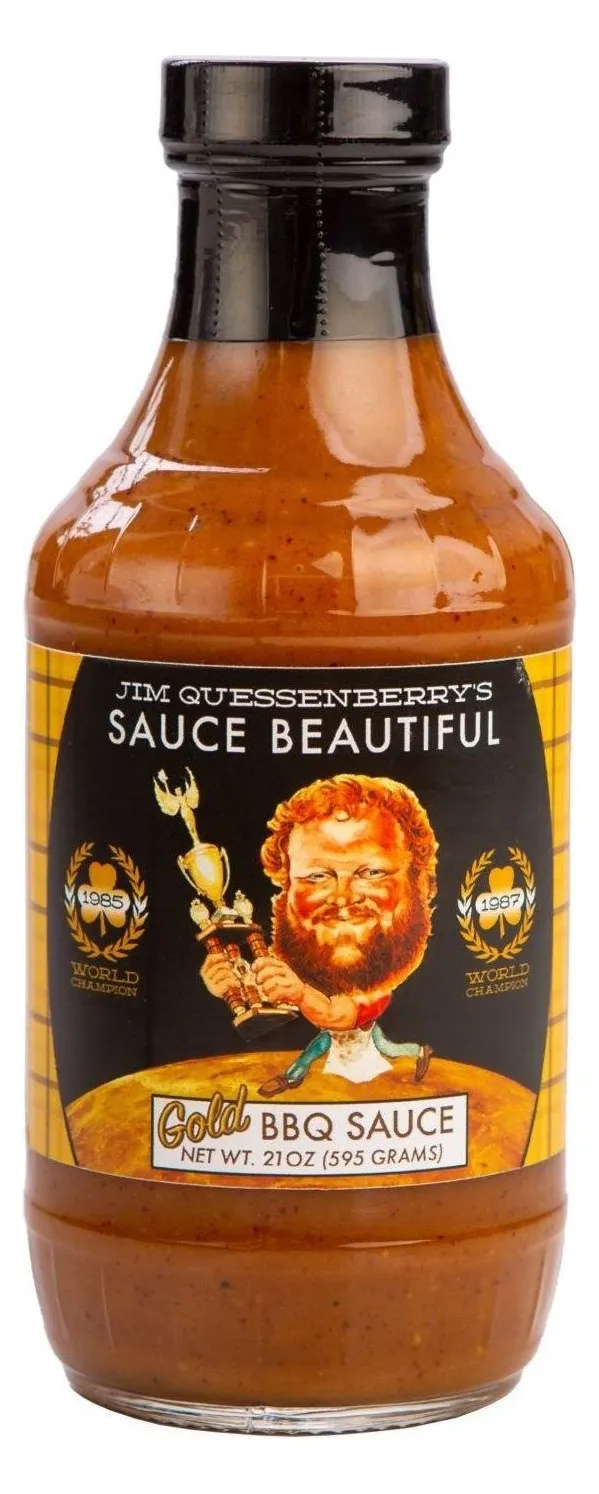
If you’re Blues Hog fans who also love the mustard-based Carolina styles, Sauce Beautiful Gold is worth specific attention. It’s our take on a South Carolina Gold / Carolina mustard sauce, and it’s a completely different profile from both Blues Hog Original and our own Sauce Beautiful Original. Mustard-forward, tangy, punchy — great on pulled pork and chicken.
For more on mustard-based BBQ sauce styles, see our Carolina BBQ sauce guide.
The honest recommendation
If you’ve never had Sauce Beautiful and you’re a Blues Hog regular, the easiest way to decide is to cook with both on the same meat. Pick a rack of ribs or a smoked chicken, brush half with Blues Hog and half with Sauce Beautiful in the last 30 minutes, and taste them blind afterward.
You’ll probably have a clear preference one way or the other — and that preference will tell you something real about your BBQ philosophy. If you like “sweet and glazed,” Blues Hog is right. If you like “balanced and deep,” Sauce Beautiful is right.
Either way, you’re buying from a small-batch American pitmaster operation. Both brands deserve the support. But they’re different, and we’re not going to pretend otherwise.
What to do next
Start with Sauce Beautiful Original if you want to compare the flagship sauces directly. If you want to try the full range at a discount, the Pick 3 Combo gets you three sauces — Original, White, and Gold cover three completely different regional styles.
For the rubs that pair with Sauce Beautiful, see Spice Beautiful Original and Spice Beautiful Hickory.
Cook that sumbitch. We’ll eat it.
— End of dispatch · Hand-packaged in Arkansas —