The Arkansas Trav'ler
Pitmaster Gazette · Championship BBQ Edition
BBQ History
What Is Memphis BBQ Sauce? The Tomato-and-Vinegar Classic
Memphis BBQ sauce is what most people outside the South actually think of when they think “barbecue sauce” — it’s the tomato-based, vinegar-forward, slightly sweet red sauce that shows up on pork ribs and pulled pork sandwiches across the mid-South. It’s the sauce style that built the barbecue identity of a whole city, and it’s arguably the most influential regional BBQ sauce in America.
But Memphis sauce is also frequently misunderstood. It’s not as sweet as Kansas City. It’s not as vinegar-heavy as Eastern Carolina. It’s not as thin as a Texas mop sauce. It sits in the middle — and that middle is where most great American BBQ sauces live.
Here’s the full story of Memphis BBQ sauce: what it is, where it came from, how it’s different from the other regional styles, and where Sauce Beautiful fits in the Memphis tradition.
The short definition
Memphis BBQ sauce is a tomato-based sauce built on ketchup or tomato paste, sharpened with apple cider vinegar, sweetened moderately with brown sugar and molasses, and spiced with a traditional BBQ blend (paprika, garlic, onion, black pepper, mustard). It’s thinner than Kansas City sauce and less vinegary than Carolina sauce. It’s applied as a finishing glaze or served on the side — rarely used as a marinade.
The classic Memphis flavor profile, in order of prominence:
- Tomato (but not overwhelmingly)
- Vinegar tang
- Brown sugar / molasses sweetness
- Warm spice
- A whisper of smoke (sometimes from liquid smoke, sometimes just from the spices)
If you have a good bottle of Memphis sauce, you should be able to pick out all five notes in a single taste. If one note dominates everything else, it’s drifted toward a different regional style.
Where Memphis BBQ sauce came from
Memphis sits on the Mississippi River at the crossroads of the Deep South and the mid-South. In the late 1800s and early 1900s, Memphis became a major hub for pork barbecue — it was cheap, available, and it could be cooked by anyone with a pit and some wood. The barbecue scene grew around small neighborhood joints run mostly by Black pitmasters, and each one developed its own sauce style.
The first famous Memphis BBQ joint that put the city on the map was Leonard’s Pit Barbecue, which opened in 1922. Then came Payne’s, Cozy Corner, Charlie Vergos’ Rendezvous, Interstate Bar-B-Que, The Bar-B-Q Shop, and eventually the massive Corky’s chain. Each place had a sauce that was identifiably Memphis — tomato-based, vinegar-sharpened, moderately sweet — but each had its own exact recipe and personality.
Two things shaped the Memphis style into what it became:
-
The meat is the star. Memphis pitmasters traditionally cooked whole hogs, pork shoulders, and ribs. The sauce was never meant to cover the meat — it was meant to brighten it, cut the fat, and add a sweet-tangy counterpoint. That’s why Memphis sauces tend to be thinner and lighter than sweet Kansas City styles.
-
Dry ribs vs wet ribs. In Memphis, ribs come in two forms: dry (heavily rubbed, no sauce) and wet (sauced at the end). The wet style is where Memphis sauce really gets to shine. The Rendezvous famously serves dry ribs only. Corky’s serves wet. Most Memphis joints offer both and let you pick.
Memphis vs Kansas City
This is the comparison most people make, and it’s a fair one because these two styles are closer to each other than either is to Carolina or Texas.
Kansas City BBQ sauce is:
- Thicker — more tomato paste, less liquid
- Sweeter — more brown sugar, more molasses, sometimes honey
- Richer — often has bacon fat or butter in the base
- Darker — deep mahogany color from heavy molasses
- Built for burnt ends, brisket, and pork ribs with a heavy finishing glaze
Memphis BBQ sauce is:
- Thinner — more vinegar, more juice
- Less sweet — the vinegar and tomato balance the sugar
- Brighter — more acidic, more spice-forward
- Lighter in color — not as dark as KC
- Built for pork shoulder and ribs as a brushed-on finish or dipping sauce
If you’re eating a pulled pork sandwich in Memphis, the sauce won’t coat your fingers. If you’re eating one in Kansas City, it will.
Memphis vs Carolina
The Carolina styles (which we cover in our Carolina BBQ sauce guide) are thinner and more vinegar-forward than Memphis. Eastern Carolina sauce is basically vinegar and red pepper flakes — no tomato at all. Western Carolina (Lexington-style) adds some tomato but stays thin. South Carolina uses yellow mustard as the base.
Memphis sauce has tomato — that’s the defining feature that separates it from Eastern Carolina. And it’s thicker and sweeter than any Carolina style while still being thinner and less sweet than Kansas City.
The easy mental model: Carolina = thinnest, Memphis = middle, Kansas City = thickest.
Memphis vs Texas
Traditional central Texas BBQ barely uses sauce at all. A brisket joint like Franklin Barbecue in Austin serves sauce on the side — and it’s usually a thin, spicy, beef-drippings-based sauce rather than the sweet-tomato style that dominates the rest of the country.
East Texas sauce (closer to Louisiana) is closer to Memphis style — tomato-based, sweeter, more universally appealing. But central Texas is a different world.
Memphis sauce is what people think BBQ sauce tastes like because Memphis-style is what most national brands imitate. Sweet Baby Ray’s, Heinz, Kraft — most of the mass-market red sauces are loose versions of Memphis style, usually shifted a little sweeter for mass appeal.
Memphis in May: the World Championship
If you want to understand Memphis BBQ culture, you need to know about Memphis in May.
The Memphis in May World Championship Barbecue Cooking Contest started in 1978 and predates most of the other major American BBQ competitions. Teams from all over the country (and increasingly the world) come to Tom Lee Park on the Mississippi River in May and cook three categories: whole hog, shoulder, and ribs. The winners are the best in the world at those styles.
Jim Quessenberry cooked at Memphis in May from the inaugural contest in 1978 through 1994 — bookended by his two Lisdoonvarna World Championship wins in 1985 and 1987. The Memphis in May crowd was where Jim sharpened his sauce and rub philosophy, cooking next to the best pitmasters in the country year after year and learning what made a judges’ sauce different from a backyard sauce.
Famous Memphis pitmasters
A few names worth knowing if you care about the Memphis tradition:
- Charlie Vergos — founder of the Rendezvous, credited with pioneering the Memphis dry-rub rib style in the early decades of his restaurant
- Jim Neely — founded Interstate Bar-B-Que in the late 1970s, became a Memphis institution
- John Willingham — Memphis in May multiple winner, known for “W’ham Turbo Cookers” and his book “John Willingham’s World Champion Bar-B-Q”
- Melissa Cookston — multi-time Memphis in May whole-hog champion, one of the most decorated female pitmasters in the country
- Mike Mills — not Memphis per se (he’s from Murphysboro, IL) but an honorary member of the Memphis style crowd as a multi-time Memphis in May grand champion
Each of these pitmasters has their own sauce style, but all of them are working within the broad Memphis tradition.
How to use Memphis BBQ sauce
Memphis sauce is a finishing sauce first and a dipping sauce second. What it is not is a marinade. The sugar in any tomato-based sauce will burn if you put it on meat and then apply long heat — so Memphis sauce, like all red sauces, should go on in the last 30-45 minutes of a cook.
Best uses:
- Pork ribs — brushed on in the last hour of a 5-6 hour smoke. See our full rib method.
- Pulled pork — served on the side, not mixed in. Let eaters sauce to taste.
- Smoked chicken — brushed on in the last 15-20 minutes
- Burgers — on the bun, not cooked into the patty
- Brisket — as a dipping sauce on the side (if you’re not a Texas purist about it)
How Sauce Beautiful Original fits into the Memphis tradition
Jim Quessenberry was from Arkansas, not Memphis — but Arkansas BBQ sits right next door to the Memphis tradition and borrows heavily from it. Jim’s style is fundamentally a Memphis-leaning sauce: tomato base, vinegar sharpness, moderate sweetness, strong spice backbone, finished with the long smoky depth that comes from a sauce built by a pitmaster who actually competed.
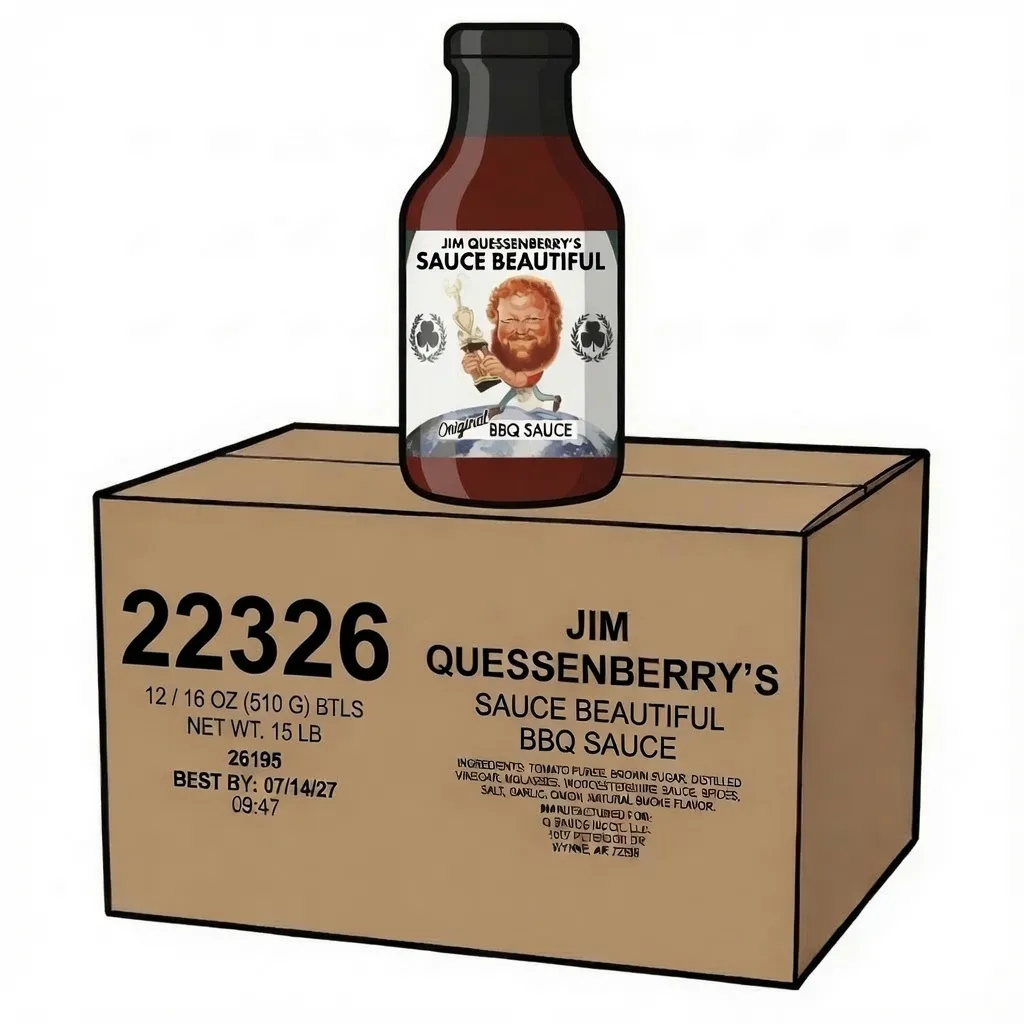
Sauce Beautiful Original is what happens when a championship pitmaster who cooked at Memphis in May takes the Memphis tradition and tweaks it for his own flavor palate. It’s thicker than a traditional Memphis sauce, rounder than a pure Memphis, and it has a personality that’s all Jim — but it lives in the Memphis tradition of “tomato-and-vinegar sauce that lets the meat speak.”
If you’re cooking Memphis-style ribs or pulled pork and you want a sauce that respects that tradition without trying to be a Sweet Baby Ray’s knockoff, that’s the bottle to grab.
Cook that sumbitch. We’ll eat it.
— End of dispatch · Hand-packaged in Arkansas —